Grades 1–2
Adding and taking away
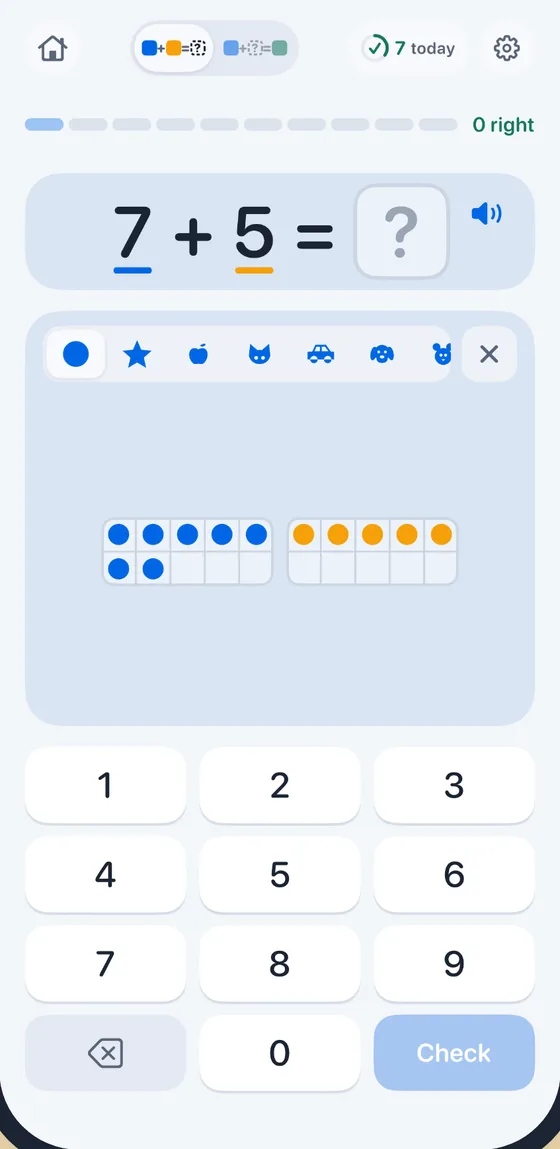
Schools now teach a few strategies alongside memorizing facts. Kids learn to break numbers apart so the math gets easier: 8 + 5 becomes 8 + 2 + 3, and 6 + 7 becomes double 6 plus 1. The goal is facts within 20 that come quickly and make sense.
What kids learn, grade by grade
- KAdd and take away within 10, often with fingers and objects. That's expected.
- 1Add and take away within 20 using making 10, doubles and counting on.
- 2Know facts within 20 quickly, and add and take away within 100 using tens and ones.
Try this at home
- Practice “pairs that make 10”: you say 3, they say 7.
- Ask how they solved it, not just the answer. “I did 8 + 2 first” is a great answer.
- Use doubles in daily life: 4 wheels on 2 bikes, 6 eggs and 6 more.
Guide for this topic
Making 10: the trick behind 8 + 5
Why schools teach kids to solve 8 + 5 as 8 + 2 + 3, how making 10 works on a ten frame, and how to practice it at home. · 4 min read
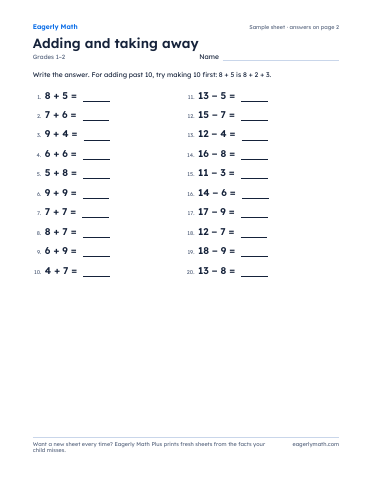
Sample worksheet to print
One sample sheet for this topic, with the answers on page 2. Want a new sheet every time, built from the facts your child misses? That comes with Eagerly Math Plus.

The app · iPhone and iPad
Practice it in Eagerly Math
- The same pictures as these guides
- Show me, when a question is hard
- From counting to fractions, K to 5
- No ads, no tracking, no game rewards