 Eagerly
Making 10: the trick behind 8 + 5
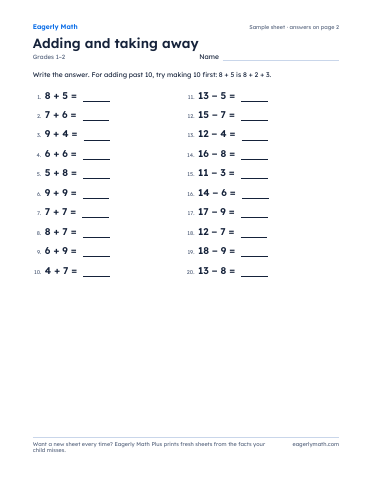
Why schools teach kids to solve 8 + 5 as 8 + 2 + 3, how making 10 works on a ten frame, and how to practice it at home.
What it is
Making 10 is a way to add when the answer goes past 10. Instead of counting on from 8, your child moves enough from the 5 to fill up 10, then adds what's left.
Why schools teach it
Adding to 10 is easy, and so is adding to a ten: 10 + 3 is just 13. Making 10 turns a hard fact into two easy ones. It also prepares kids for bigger numbers, where 38 + 5 works the same way: 38 + 2 + 3 = 43.
A picture walk-through
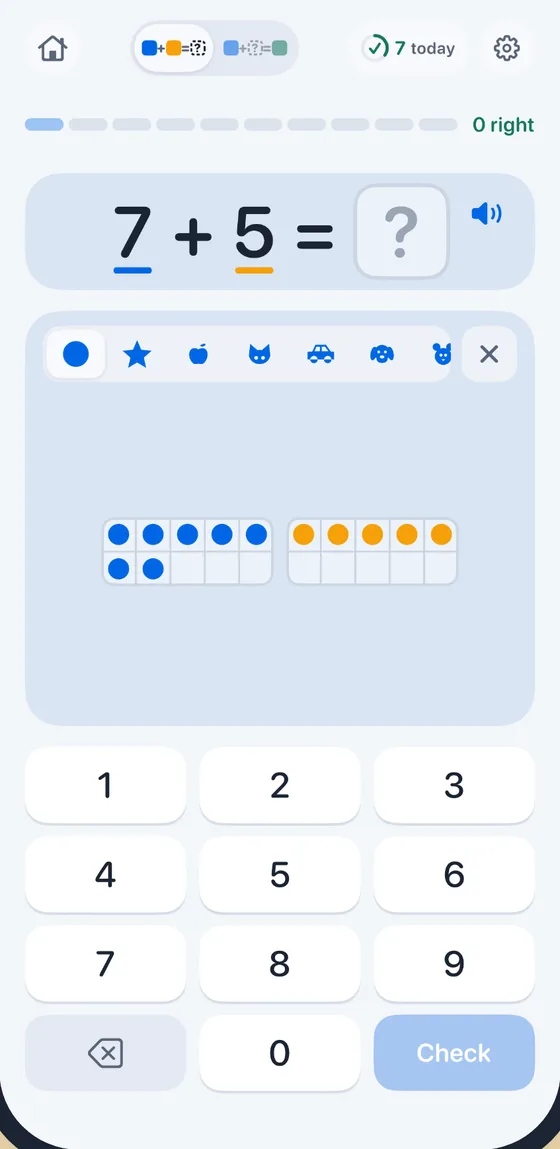
- Start with 8 on the first frame and 5 on the second. Two squares on the first frame are empty.
- Move 2 of the 5 into the gaps. The first frame is now full: 10.
- 3 are left over. 10 and 3 is 13.
Things to say at home
- “What goes with 8 to make 10?” Knowing the pairs that make 10 is the key step.
- “How many are left after you made 10?”
- “Is there another way?” Some kids prefer doubles: 6 + 7 is 6 + 6 + 1.
Common mix-ups
- Losing track of the leftovers. Writing the split under the number (5 as 2 and 3) helps.
- Not knowing the pairs to 10 yet. Practice those first: 1 and 9, 2 and 8, up to 5 and 5.