Grades 1–3
Tens, ones and place value
Place value is the idea that a digit's spot tells its size: in 34, the 3 means 3 tens. Schools teach it with blocks, where a rod is a ten and a cube is a one. Once kids see that 10 ones can trade for 1 ten, carrying and borrowing (now called regrouping) make sense instead of being a rule to memorize.
What kids learn, grade by grade
- 1Two-digit numbers as tens and ones, and 10 more or 10 less.
- 2Hundreds, tens and ones up to 1,000, and adding and taking away with regrouping.
- 3Adding and taking away within 1,000 quickly, and rounding to 10 or 100.
Try this at home
- Bundle straws or sticks in tens with a rubber band. 34 is 3 bundles and 4 loose ones.
- Count money in dimes and pennies. A dime is a ten.
- Ask “what's 10 more than 47?” and let them notice only the tens digit changes.
Guide for this topic
Regrouping, or what we used to call carrying and borrowing
What regrouping means, why schools teach it with tens and ones blocks, and how to explain carrying and borrowing the way your child's class does. · 5 min read
Sample worksheet to print
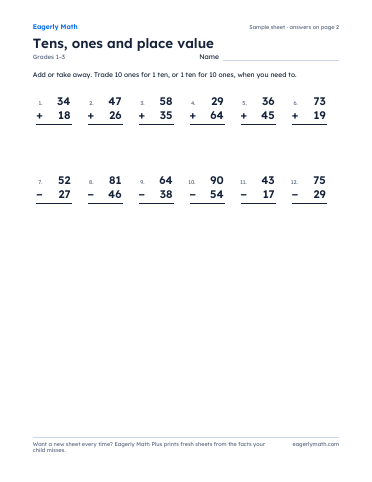
One sample sheet for this topic, with the answers on page 2. Want a new sheet every time, built from the facts your child misses? That comes with Eagerly Math Plus.
The app · iPhone and iPad
Practice it in Eagerly Math
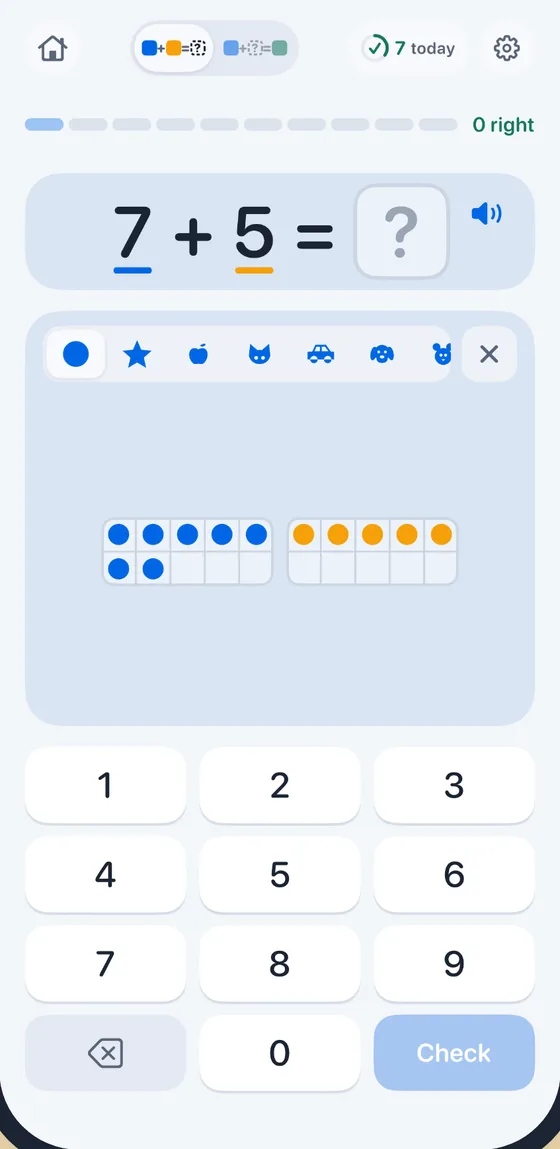
- The same pictures as these guides
- Show me, when a question is hard
- From counting to fractions, K to 5
- No ads, no tracking, no game rewards