 Eagerly
Finding the math in a word problem
A calm, four-step way to help a child read a math word problem, picture it, and choose whether to add, take away, multiply or divide.
What it is
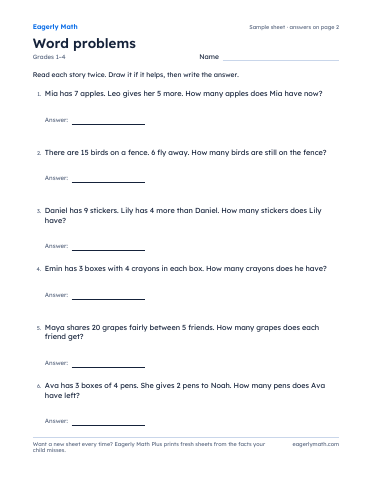
A word problem is a short story with a question at the end. The math is often easy. The hard part is working out what the story is asking.
Four steps to try
- Read it twice. Once for the story, once for the question.
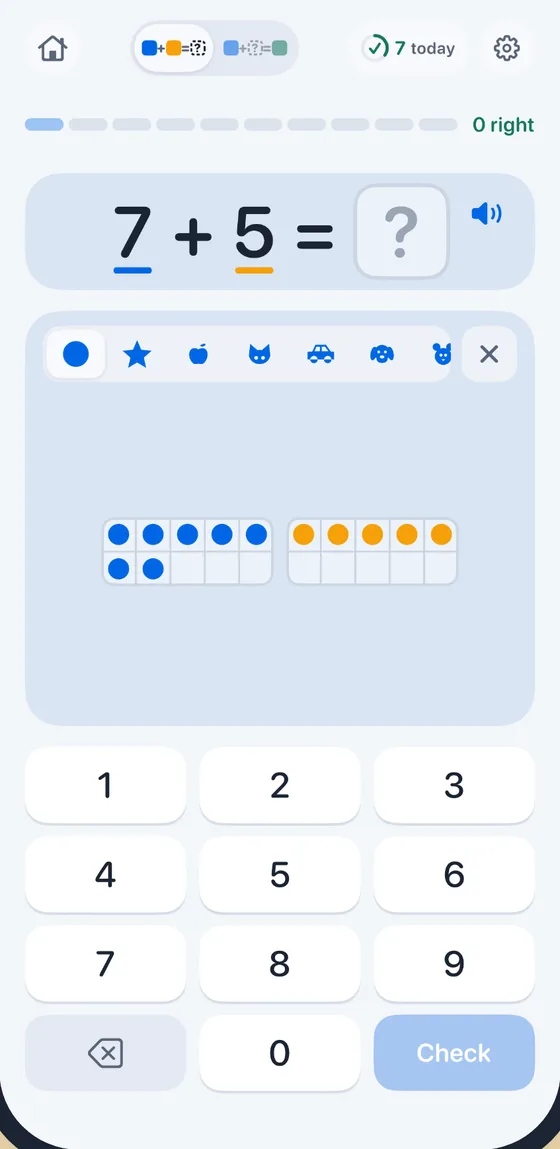
- Picture it. Draw it, act it out, or use objects.
- Decide what's happening. Is something joining, being taken away, being compared, or being put into equal groups?
- Check the answer against the story. Does 12 apples make sense?
Two-step stories
In grades 2 and 3, stories need two steps. Ask “what do we need to know first?”
Things to say at home
- “Tell me the story in your own words.”
- “Will the answer be more or less than 7?”
- “Can you draw it?”
Common mix-ups
- Key-word guessing. “Left” doesn't always mean take away, and “more” doesn't always mean add. “Mia has 5 more than Leo” can need taking away. Picture the story instead.
- Using every number in the story. Some stories include a number that isn't needed.